

The Grand Shime and Nanten (Sacred Bamboo)
Shime and Gyoi—Sacred Handwork Supporting the Pilgrimage
Within the tradition of Dewa Sanzan, there are two forms of sacred handwork that support the pilgrimage.
One is the shime, worn over the shoulder, and the other is the gyoi, a white robe worn upon the body.
Shime — The Sacred Cord
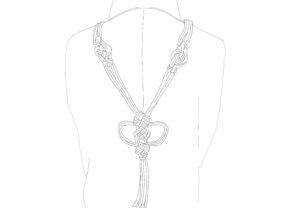
The shime is worn over the shoulder by pilgrims.
Just as shimenawa ropes are placed at shrine gates and sacred rocks (iwakura) to mark them as holy spaces, wearing a shime signifies entry into the realm of prayer, binding the pilgrim to the sacred domain.
At the same time, the shime functions as a symbolic boundary of protection—a spiritual safeguard that wards off misfortune and helps maintain the purity of both body and mind during pilgrimage and prayer in the mountains.
Gyoi — The Pilgrim’s Robe
By contrast, the gyoi is a white pilgrim’s robe adorned with yamazuri prints—woodblock-style ink prints made with sumi, depicting the names and symbolic forms of the Three Mountains of Dewa.
As pilgrims move from one sacred site to another, those who wish may receive goshuin seals, added one by one, allowing the robe to become a visible record of their pilgrimage.
In quietly receiving the pilgrim’s journey in tangible form, the gyoi becomes a precious testament, gently binding together prayer and the passage of time.
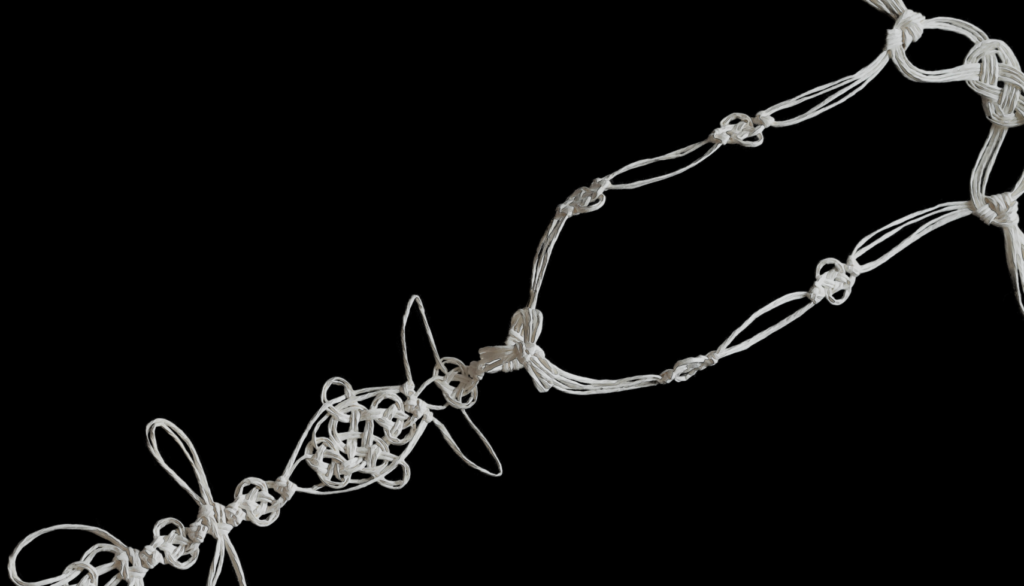
A quiet guardian, the shime, and the gyoi, which softly receives and bears the pilgrim’s prayers.
Clad in these sacred garments, pilgrims step into the divine realm, and over time, this attire comes to support its wearer throughout life—taking shape as a steadfast embodiment of prayer.
A Sign of Readiness to Enter the Sacred Realm — O-jime and Ko-jime
Within the spiritual tradition of Dewa Sanzan, the shime is an indispensable element of pilgrimage.
It signifies one’s readiness to step into sacred ground, serves to purify both body and spirit, and clearly marks the boundary between the everyday world and the divine.
In this region, there are two distinct forms of shime: the O-jime and the Ko-jime.
Among them, the O-jime (meaning “large shime”) is a hand-crafted pilgrim’s adornment, composed of multiple layers of intricately braided patterns.
Its presence alone conveys the solemn resolve required to enter the sacred mountains.
A Rare Handcrafted Tradition — O-jime
The craft of the O-jime has been preserved by Pilgrims’ Lodges, and the completed pieces have long been cherished by the communities of devotees they serve.
Over time, however, the number of lodges able to carry on this tradition has declined significantly.
Today, only a very small number of practitioners remain who are capable of crafting an O-jime by hand.
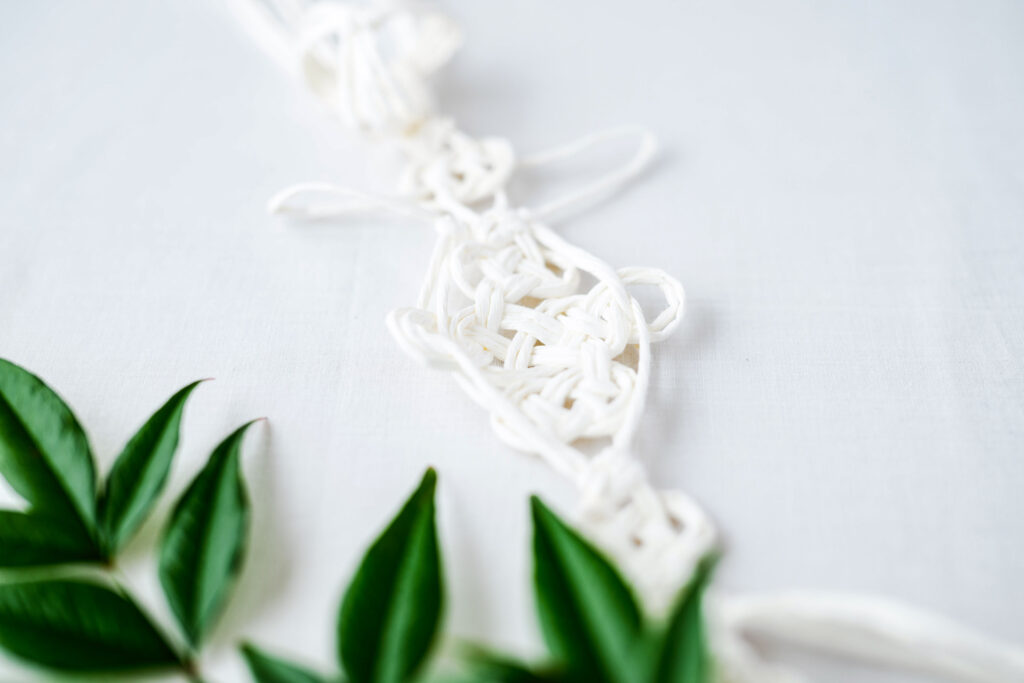
Depending on the type of cord used, a single O-jime may require more than twenty meters of braided cord.
As a result, its creation demands considerable time, patience, and skill.
The process of assembling such length into complex, sometimes three-dimensional patterns involves subtleties that cannot be fully conveyed through words alone.
Only through repeated practice—by making many pieces over time—does one gradually acquire the necessary sensibility. Without this accumulation of experience, the form will not settle, and the shime cannot attain its inherent beauty.
Through this quiet repetition, each O-jime is braided strand by strand and brought into being.
A Tangible Form of Prayer
Sanada Enmei-in is one of the Pilgrims’ Lodges that continues to preserve this tradition of the O-jime.
Each shime crafted by hand carries within it the faith safeguarded by generations past, as well as the spiritual ethos of Dewa Sanzan itself. It is both a visible adornment and, at the same time, a tangible embodiment of prayer.
Because each O-jime requires significant time to complete, the number that can be made in a single year is limited.
For this reason, they are offered primarily to long-standing devotees and those who continue their pilgrimage year after year.
A Sacred Boundary for Pilgrimage — Ko-jime
The Ko-jime (meaning “small shime”) may be the form most commonly encountered during pilgrimage in Dewa Sanzan.
Compared to the O-jime, its construction is more restrained, yet this simplicity allows for ease of wear and emphasizes practicality suited to movement.
During mountain practices such as the Oyamagake, including ascents of Mt. Gassan, the Ko-jime serves as a reliable sacred boundary—keeping the practitioner light of body and clear in spirit amid rigorous physical movement.
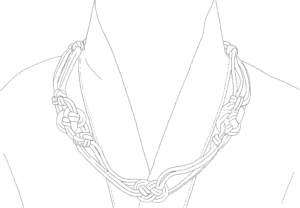
At Sanada Enmei-in, those experiencing pilgrimage, prayer, or ritual for the first time are asked to wear the Ko-jime.
As an initial step in facing the sacred realm, it offers a gentle yet meaningful connection to the path of prayer.
While Ko-jime are often produced externally in many places, at our lodge they are crafted in-house, just like the O-jime.
Each one is prepared with care, carrying prayers for the pilgrim’s safety and the fulfillment of their intentions.
Yamazuri Prints
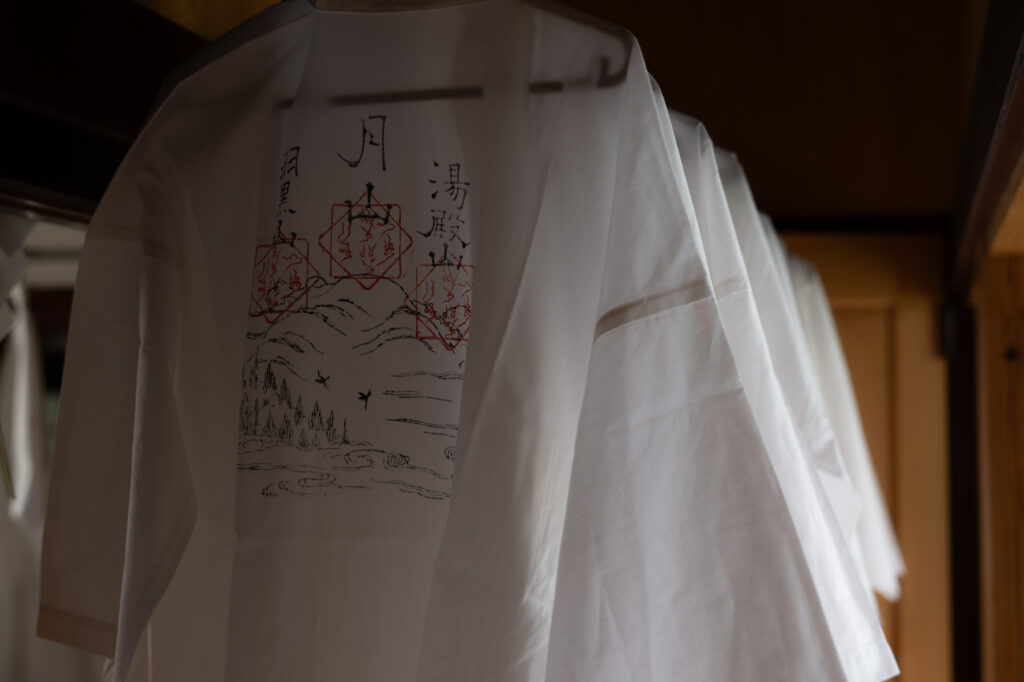
Alongside the shime, pilgrims wear white robes adorned with yamazuri prints during their journey.
Yamazuri are traditional woodblock prints applied to the robe using sumi ink.
Each design bears the names of the Three Mountains of Dewa—Mt. Haguro, Mt. Gassan, and Mt. Yudono—together with symbolic motifs representing the mountains themselves.
In recent years, yamazuri produced through mechanical printing have become increasingly common.
At our lodge, however, this work continues to be carried out entirely by hand, in keeping with long-standing tradition.
Woodblocks Passed Down Through Generations
The wooden blocks used for yamazuri are traditionally kept by each Pilgrims’ Lodge.
At Sanada Enmei-in, we also preserve woodblocks that have been handed down over generations, and they continue to be used with great care, their condition maintained as they are passed along.
During the printing process, sumi ink is applied to the woodblock, and the white robe is placed carefully on top.
Using a baren—a traditional hand-printing tool—pressure is applied evenly by hand to transfer the design.
Guide marks are used to ensure precise placement, after which the motifs are printed and goshuin seals are stamped.
Through this careful sequence of steps, a single pilgrim’s robe is brought to completion.
The Gyoi: Marking the Pilgrim’s Journey
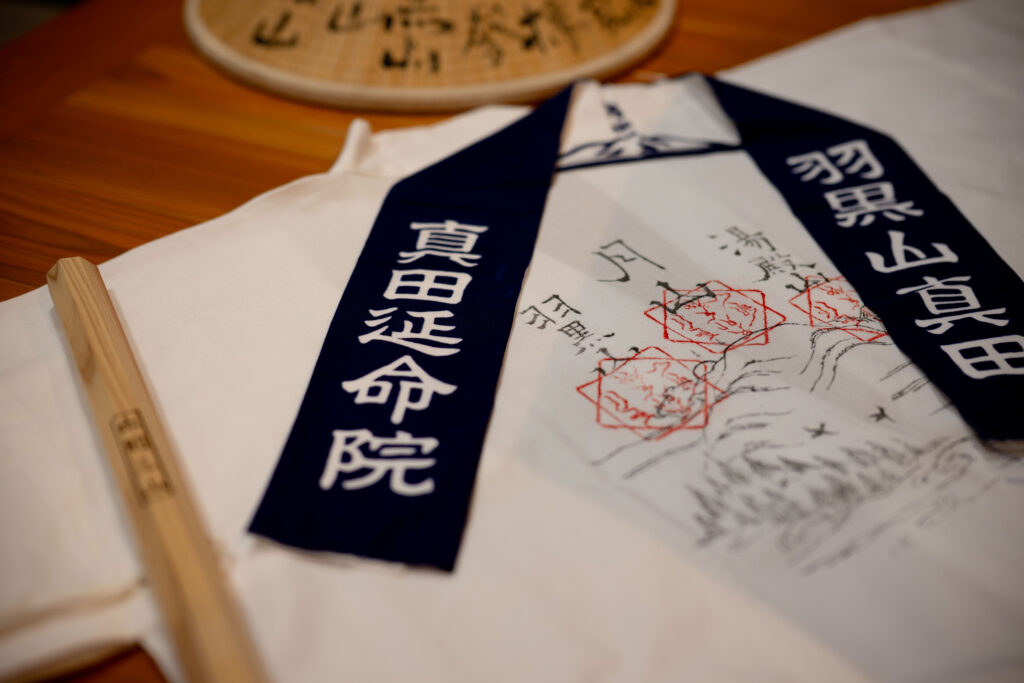
A white robe bearing yamazuri prints, worn together with the shime, is known as a gyoi.
For pilgrims, it holds a deeply personal and spiritual significance.
As the pilgrimage unfolds, the gyoi receives goshuin seals at each sacred site.
With every seal, the robe gradually takes on a unique character, responding to the passage of time woven through the journey itself.
These seals stand as tangible traces of one’s steps and may be understood as the accumulation of prayer made visible.
Through repeated pilgrimages, the gyoi becomes a one-of-a-kind presence—an enduring companion that supports its wearer throughout life.
In some cases, it is even placed within the coffin at the time of one’s final journey, a testament to how the gyoi binds together prayer and the course of a person’s life.
Winter Handwork Supporting the Pilgrimage
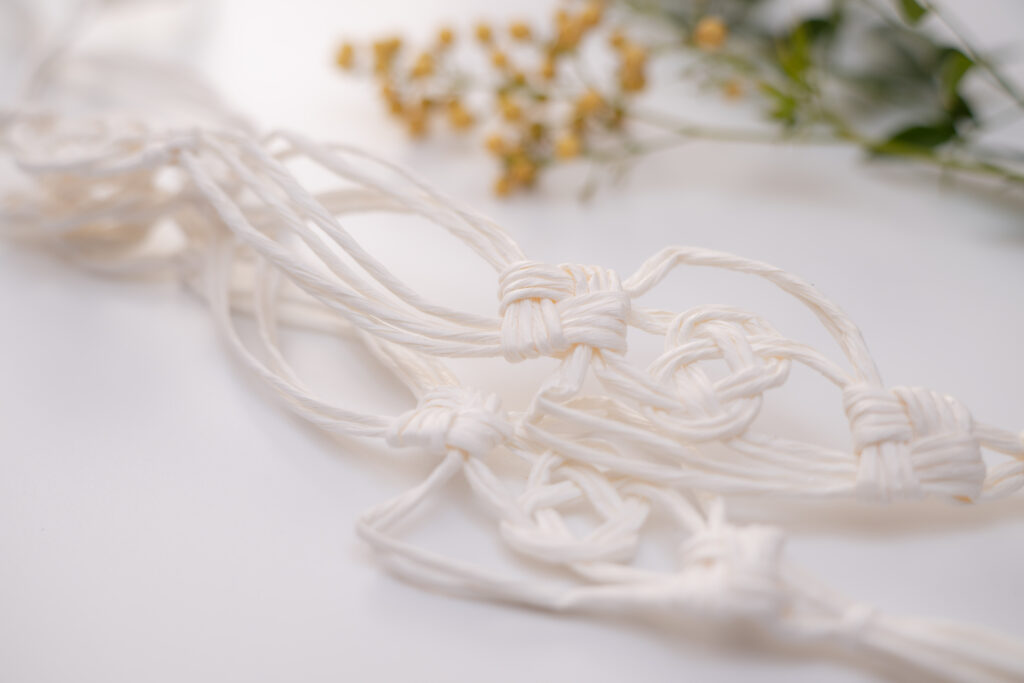
Each year from January through April, shime and yamazuri are crafted by hand.

During this season, Dewa Sanzan is blanketed in deep snow, and our lodge enters an important time of visiting the households of our parishioners.
Within the quiet stillness of winter, shime are tied one strand at a time, and yamazuri are printed carefully, robe by robe.
Through the steady accumulation of this handwork, the pilgrimages that unfold from spring into the summer mountains are gently supported.
It is our hope that these practices will continue into the next generation, remaining close to the hearts of those who walk the path of pilgrimage.

※All photographs featured here were taken by Sanada Enmei-in.
Sanada Enmei-in
Tōge has long been a lodge town where pilgrims dressed in white travel to and from the sacred mountains.
At Pilgrims’ Lodges, pilgrims have traditionally been welcomed with warmth and care, offering rest and comfort in recognition of the long journeys they have undertaken and the sincerity of their devotion to the Dewa Sanzan.
Sanada Enmei-in is no exception. During the summer mountain season, the lodge comes alive with members of pilgrimage confraternities, clad in white robes and wearing shime, as they set out on their oyamagake across the Three Sacred Mountains. At the same time, we also welcome general guests to stay with us.
Drawing on generations of experience supporting Dewa Sanzan pilgrimage confraternities, we offer guidance and consultation as a Pilgrims’ Lodge regarding mountain worship and visits to the sacred sites.
Sanada Enmei-in
The pilgrimage through the Dewa Sanzan gently speaks to the spirit through the body.
In the teachings passed down through generations and in each step taken among the mountains, there are quiet insights not found in everyday life.

sanadaenmeiin.jp
